
Payment links
A Payment Link is a shareable URL that opens a Mollie-hosted checkout page - no website or integration required. You can send it by email, WhatsApp, social media or text, add it to an invoice or quote or turn it into a QR code to use in person or in print.
Your customer opens the link, pays with their preferred payment method and you get notified when the payment comes in.
Payment links work well for one-off requests, such as a deposit, quote or a single invoice. You can also use the same link to collect payments from multiple customers, for example for donations or a fixed-price class or event. They're also a good fit when your pricing isn't fixed or standardised, such as a custom quote or a service priced per job.
You can create payment links from the Mollie Dashboard, Mollie app or using our Payment Links API, depending on how you work.
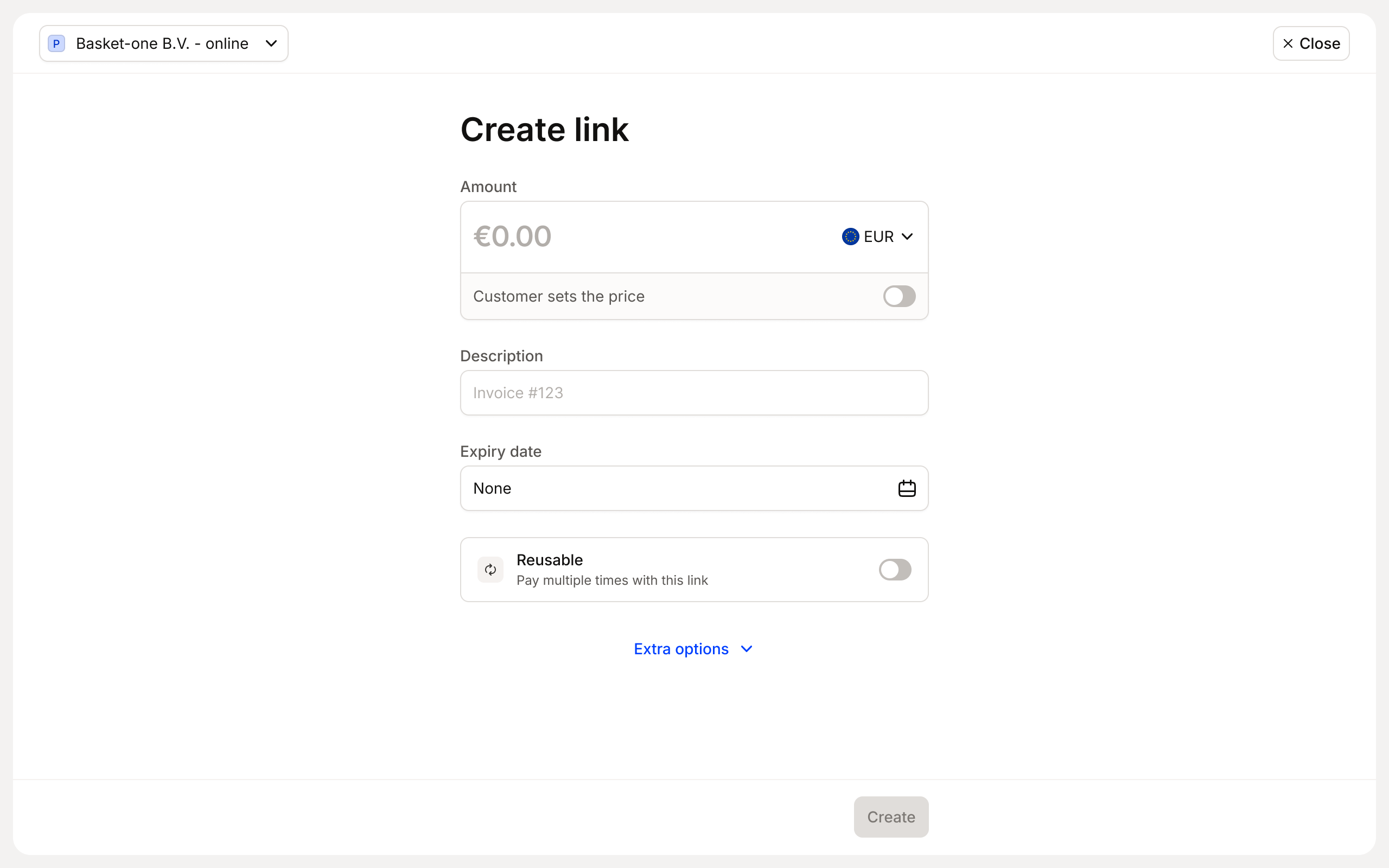
Choosing the right type of link
Every payment link combines two settings that you choose when you create it:
| Setting | Options | What it means |
|---|---|---|
| Usage | One-off or Reusable | A one-off link can only be paid once, then it expires. Use it for a specific quote, deposit or invoice. A reusable link stays open and can be paid by any number of customers. Use it for a donation page, a membership fee or a link you share widely. |
| Amount | Fixed or "Customer sets the price" | You set a fixed amount when you create the link. With Customer sets the price, the customer enters the amount at checkout. Leave the minimum at €0.00 for an open amount, or set a minimum amount so the customer must pay at least that much. |
Some common combinations:
-
One-off, fixed amount: a quote, deposit or single invoice.
-
Reusable, fixed amount: a class fee, membership or any fixed price you charge repeatedly.
-
Reusable, customer sets the price (no minimum): a donation page or "pay what you want" link.
-
Reusable, customer sets the price (with a minimum): a tip on top of a service charge, a "pay what you want, but at least X" workshop/course or a donation page with a minimum contribution.
-
One-off, customer sets the price: a single flexible payment, such as a custom quote where the customer confirms the final amount at checkout. You can set a minimum so they can't pay less than the agreed amount.
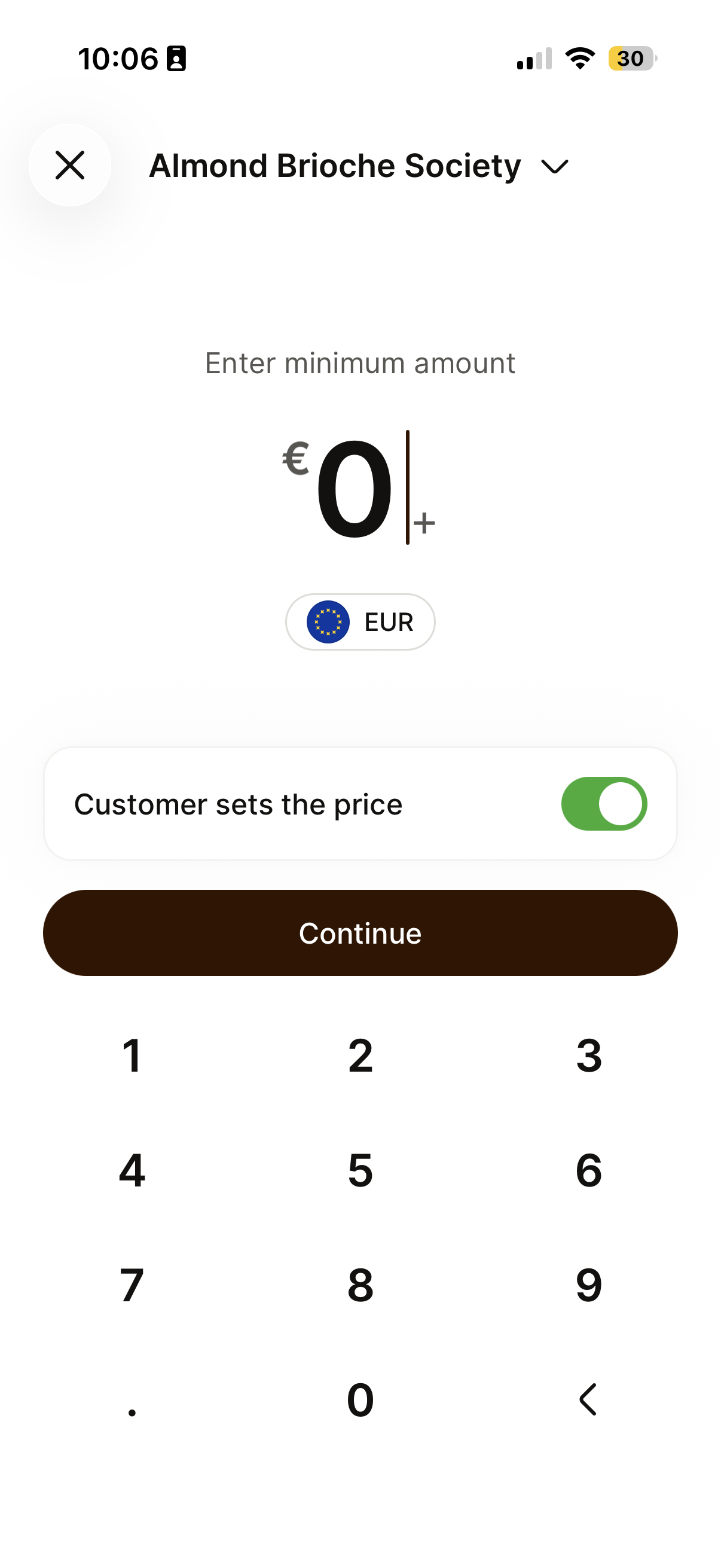
Collecting invoice payments
If you mainly use payment links to collect invoice payments, Mollie Invoicing can save you manual work. When you create an invoice in Mollie Invoicing, a payment link is generated and attached automatically. Your customer can pay directly from the invoice without any extra setup on your part.
Because the payment is linked to the invoice from the start, Mollie Invoicing can also mark the invoice as paid automatically when the payment comes in. You don't need to reconcile the payment against the invoice manually.
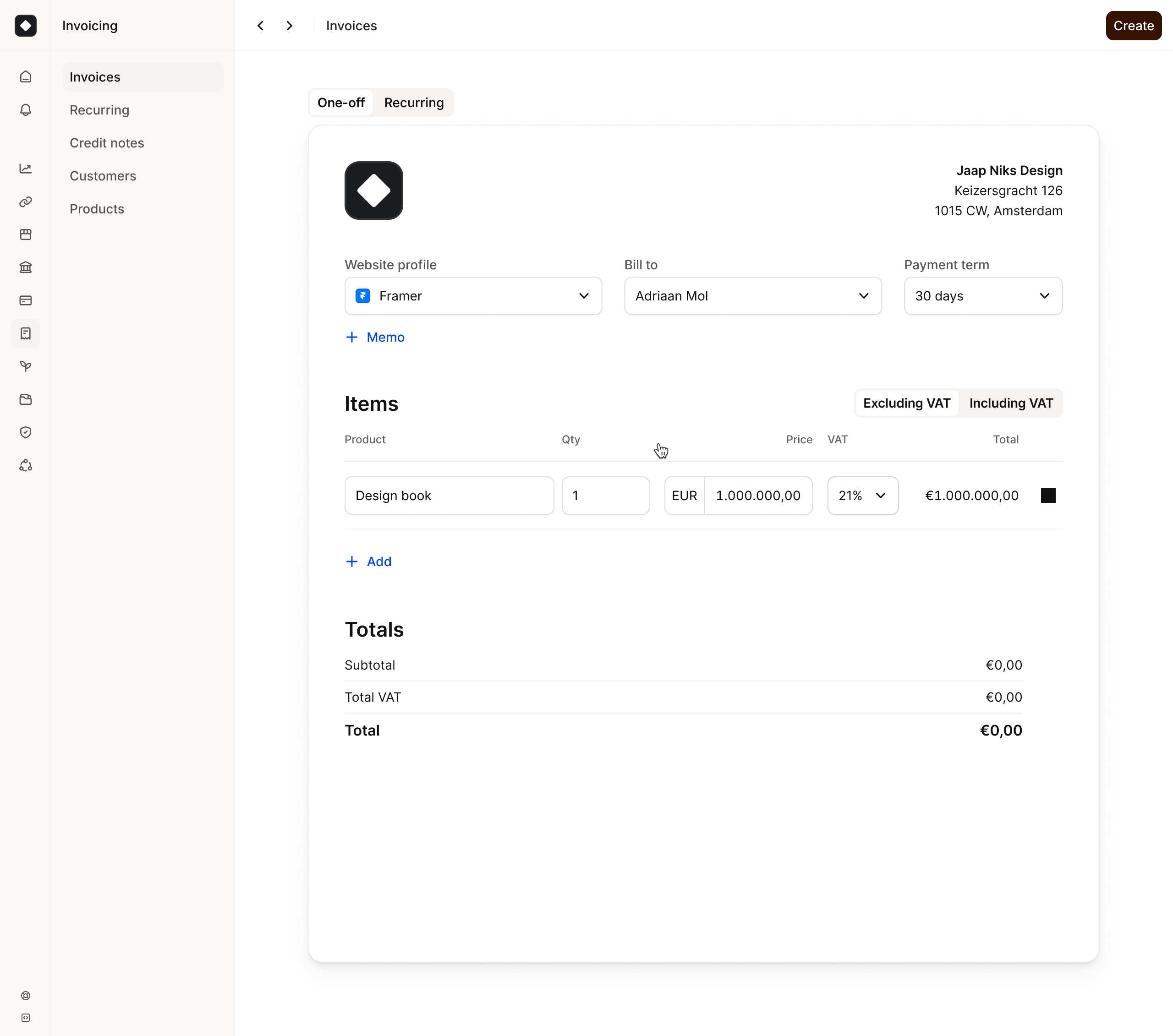
Creating payment links
Creating a payment link works the same way in the Mollie Web app and the Mollie app:
- Web app: in the menu on the left go to Payment links; Mobile app: Links tab > click or tap Create. You can also use the + Request or + shortcut on your Home screen.
- If you manage more than one business, select the correct profile at the top.
- Enter the desired amount (or turn on Customer sets the price to let the customer enter it at checkout). When Customer sets the price is on, the field becomes a minimum amount. Leave it at
€0.00for an open amount, or set a minimum (e.g.,€3), so the customer must pay at least that much. - Add a description so the customer knows what they're paying for.
- Optional: set an expiry date & turn on Reusable to accept payments from more than one customer.
- Optional: open Extra options for further settings, such as a redirect URL or restrictions for payment methods at checkout.
- Click or tap Create link.
- Share the link or its QR code with your customer using Copy link, Share or QR code.
When your customer opens the link, they're taken directly to a Mollie-hosted checkout page to complete the payment.
From the Payment links page, you can view all your links and filter them by amount, type, status or profile. Open a link to view its details.
Payment Links API
To create links automatically (e.g., when your system generates an order or invoice) you can use the Payment Links API. In addition to the features available in the Web app and Mobile app, the API lets you:
- Set a
webhookUrl- so your system is notified when a payment comes in, without anyone checking the Dashboard. - Pass line items to describe individual products on the link (some payment methods, e.g., Klarna, require them).
- Set
sequenceType: firstto establish a recurring mandate with the first payment. See Recurring payments below. - Subscribe to payment link lifecycle events to keep your systems alerted in real time.
To create a Customer sets the price link through the API, omit the amount field entirely, do not send amount: null. You can optionally include a minimumAmount object to set the minimum your customer must pay at checkout. This object is only allowed when amount is not provided.
Settings and customization
| Setting | Where to set it | Notes |
|---|---|---|
| Customer sets the price | Dashboard, app, API | Lets the customer enter the amount at checkout instead of you setting a fixed amount. Combine it with a minimum amount to set a lower limit. |
| Minimum amount | Dashboard, app, API | Only applies when Customer sets the price is on. Leave it at €0.00 for an open amount or set a minimum (e.g., for a tip on top of a service charge or a "pay what you want, but at least X" offer). |
| Description | Dashboard, app, API | Shown to the customer at checkout. |
| Expiry date | Dashboard, app, API | After this date, the link can no longer be paid. Useful for quotes that are valid for a limited time. |
| Redirect URL | Dashboard, API | Where the customer is sent after completing payment, such as your own Thank you page. |
| Allowed payment methods | Dashboard, API | Manage which payment methods are offered at checkout. |
| Line items | API | Itemise the products or services on the link. Some payment methods, such as Klarna, require them. |
Managing payment links
You can edit a payment link after creating it, for example to change the amount, description or enabled payment methods.
- Not yet paid: you can delete the link entirely.
- Already paid: you can no longer delete the link, only archive it. This applies to a paid one-off link or a reusable link that has received at least one payment. Archiving closes the link to further payments, so you can use it to stop collecting payments through a reusable link.
Sharing payment links
A payment link is a URL, so you can share it in whichever way suits your business:
- Email or invoice: paste the link or add it as a button.
- Messaging apps: share it through WhatsApp, SMS or another chat tool.
- Social media and direct messages: share reusable links with a wider audience.
- Your own website: add it to a page or button, with no integration needed.
- QR code: print it, display it in-store or add it to physical materials so customers can scan it to pay in person.
Branding
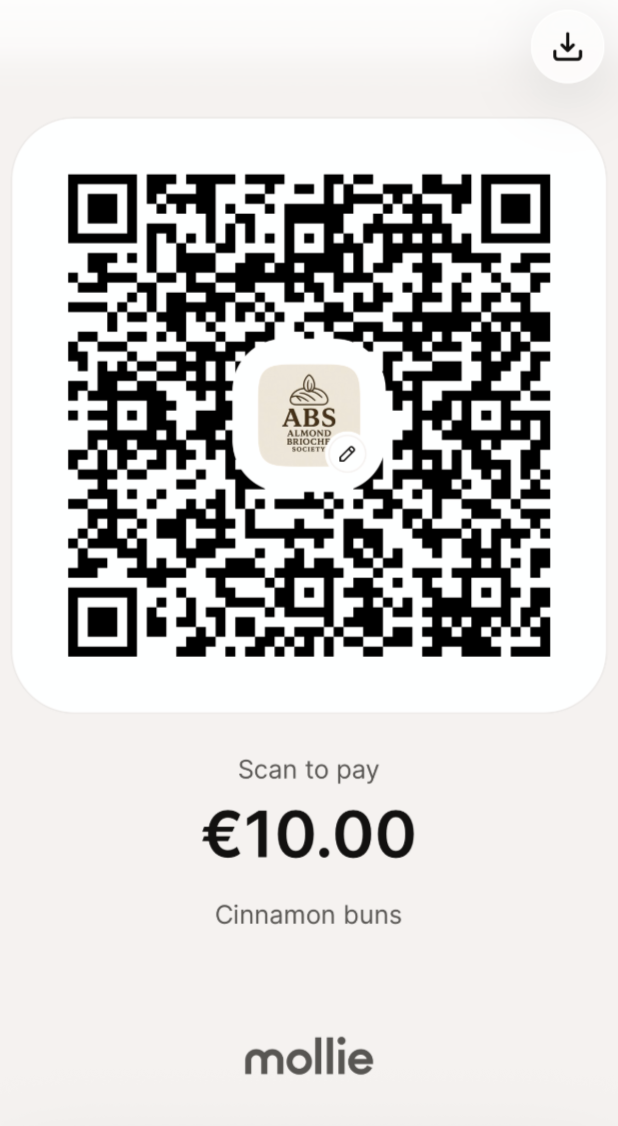
Every payment link comes with an automatically generated QR code.
You can add your own logo to the centre of the QR code so customers recognize your brand before scanning it.
When you share a payment link somewhere that supports link previews, such as a chat app or email, Mollie automatically creates a branded preview card.
It shows who's requesting the payment, that it's secured by Mollie, and what the customer is paying for and how much - all before they even open the link.
This ensures your brand remains recognisable throughout the whole payment journey, while giving customers the context and reassurance they need to trust the link and complete their payment.
Recurring payments
To collect payments automatically from a returning customer without sending a new link each time, create the link through the API with sequenceType: first. The customer completes the first payment as usual, which also sets up a mandate. You can then use that mandate, for example with the Subscriptions API, to charge the customer automatically for future payments.
If you already have a customerId for your customer, pass it when creating the link to associate the mandate with their existing customer record. If you don't provide one, Mollie collects the necessary details during checkout and creates a new customer for you automatically.
Updated 9 days ago